Red Light Mask vs Panel: Best Results in 2025
When comparing red light masks and panels, the differences in effectiveness might surprise you. Mask vs Panel deliver more power, 40 to 60 milliwatts per square centimeter at a standard 6-inch distance, while masks produce between 1 and 25 mW/cm² even when pressed directly against the skin. This power gap is just the beginning of the comparison.
Red light therapy mask vs panel choices involve several important considerations beyond just power output. To cite an instance, research shows red light therapy can penetrate between 4 and 10 millimeters into the body, but this depth varies by a lot between devices. LED face panels often provide deeper penetration and full-body coverage, while masks are more portable and specifically target facial skin. It also combines two specific wavelengths: red light at 660nm and near-infrared at 850nm.
The price difference is also substantial. Red light masks can range from under $200 to $1,000 depending on brand and quality, whereas panels cost more but deliver stronger intensity for faster results. In this piece, we’ll break down exactly how these differences affect your results, helping you determine which option, Mask vs Panel, is truly worth your investment in 2025.
Power and Performance: Which Delivers Better Results?
The performance difference between panels and masks boils down to physics. When comparing red light therapy devices, three significant factors determine effectiveness: irradiance, penetration depth, and treatment duration.
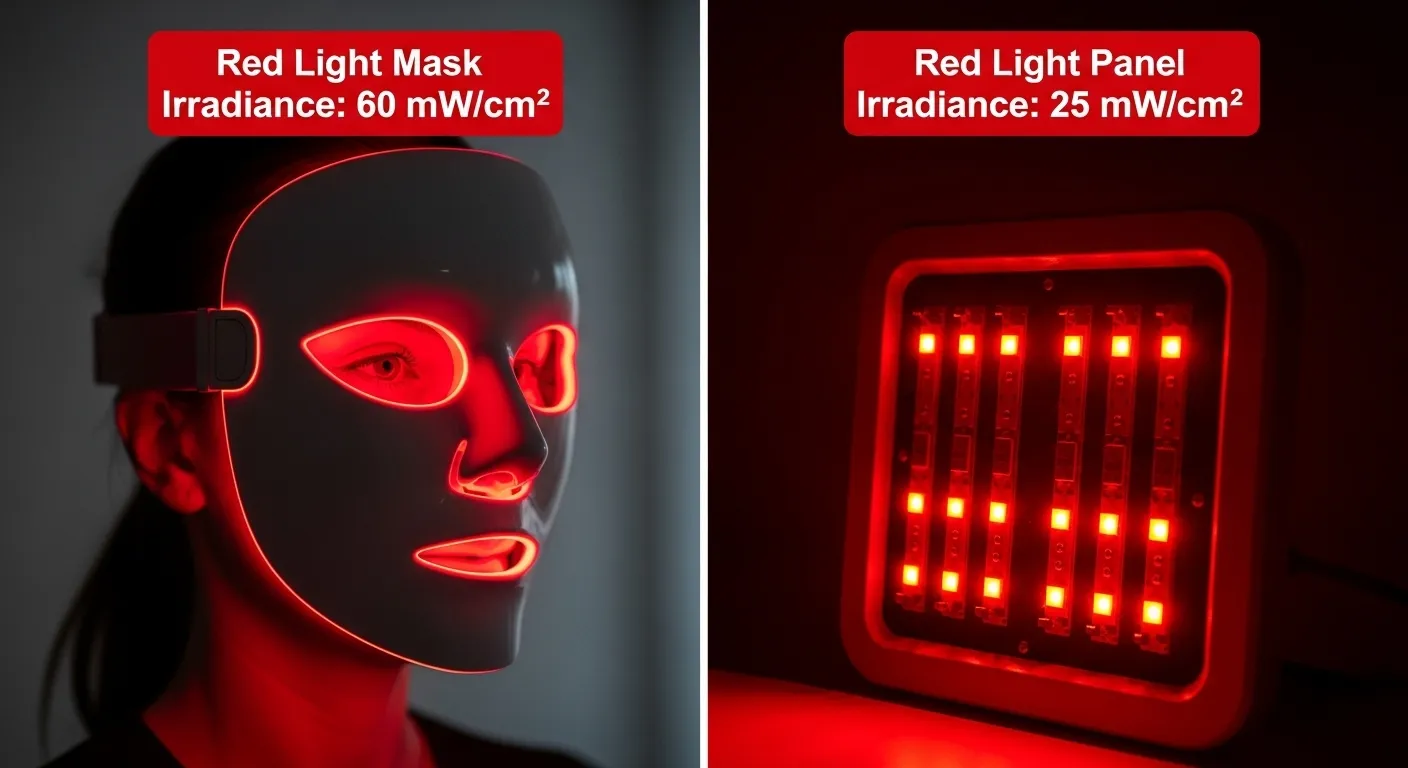
Irradiance Levels: 60 mW/cm² vs 25 mW/cm²
Irradiance measures light energy per unit area and directly affects treatment quality. LED panels deliver impressive power, typically 40–60 mW/cm² at a standard 6-inch treatment distance. Moving closer intensifies the energy, allowing customized treatment intensity.
But masks provide nowhere near as much power. Even pressed directly against the skin, most masks produce merely 1–25 mW/cm². Research shows that deeper cellular treatments need irradiance levels greater than 100 mW/cm², which most masks simply cannot deliver.
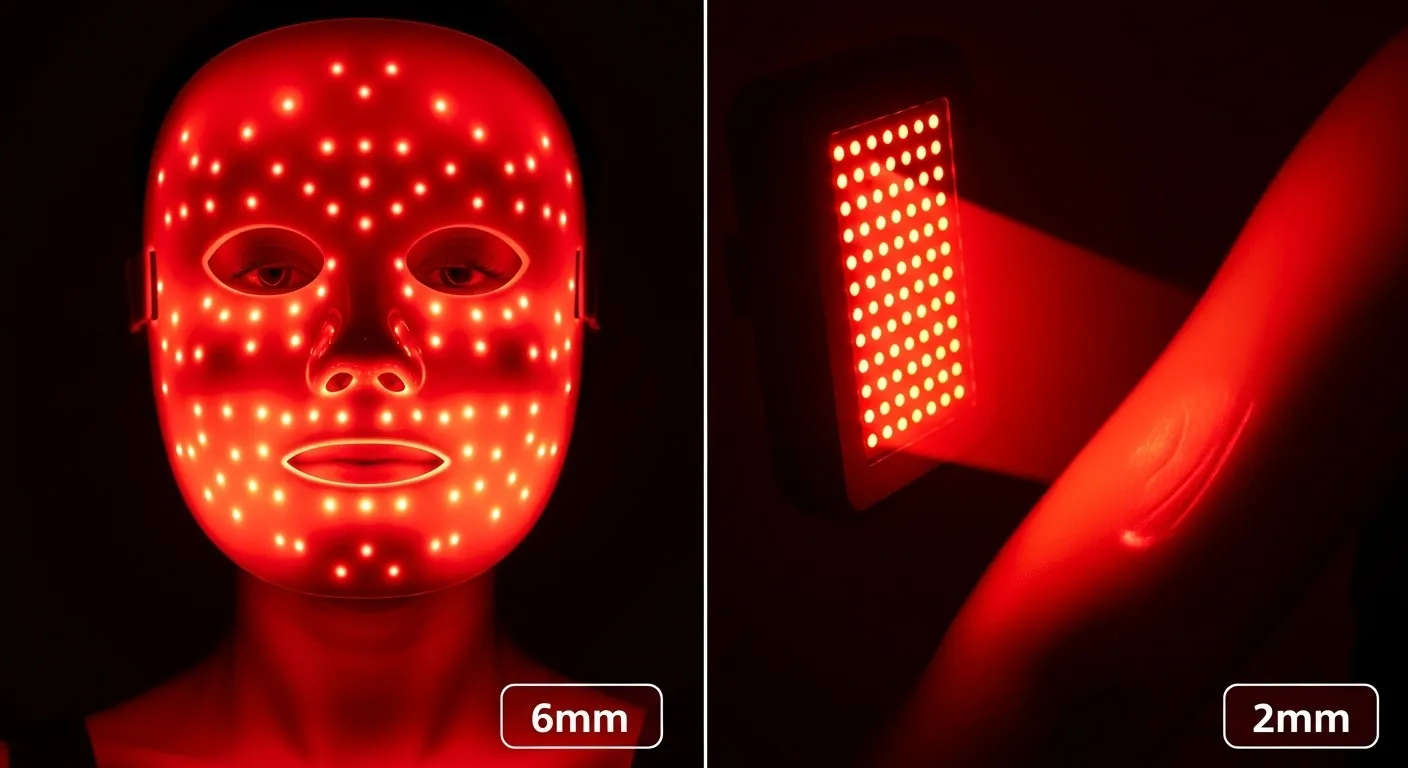
Penetration Depth: 6mm vs 2mm
Penetration depth determines which tissues receive therapeutic benefits. Studies confirm that effective red light therapy penetrates between 4–10 millimeters into tissue, with an average depth of 6mm.
So, devices must deliver enough energy to reach this depth.
Panels, with their higher irradiance, can reach deeper skin layers and underlying tissues. Masks primarily affect surface skin cells due to their limited power output. For deeper issues like muscle recovery or joint pain, panels clearly outperform masks in delivering therapeutic wavelengths where needed.
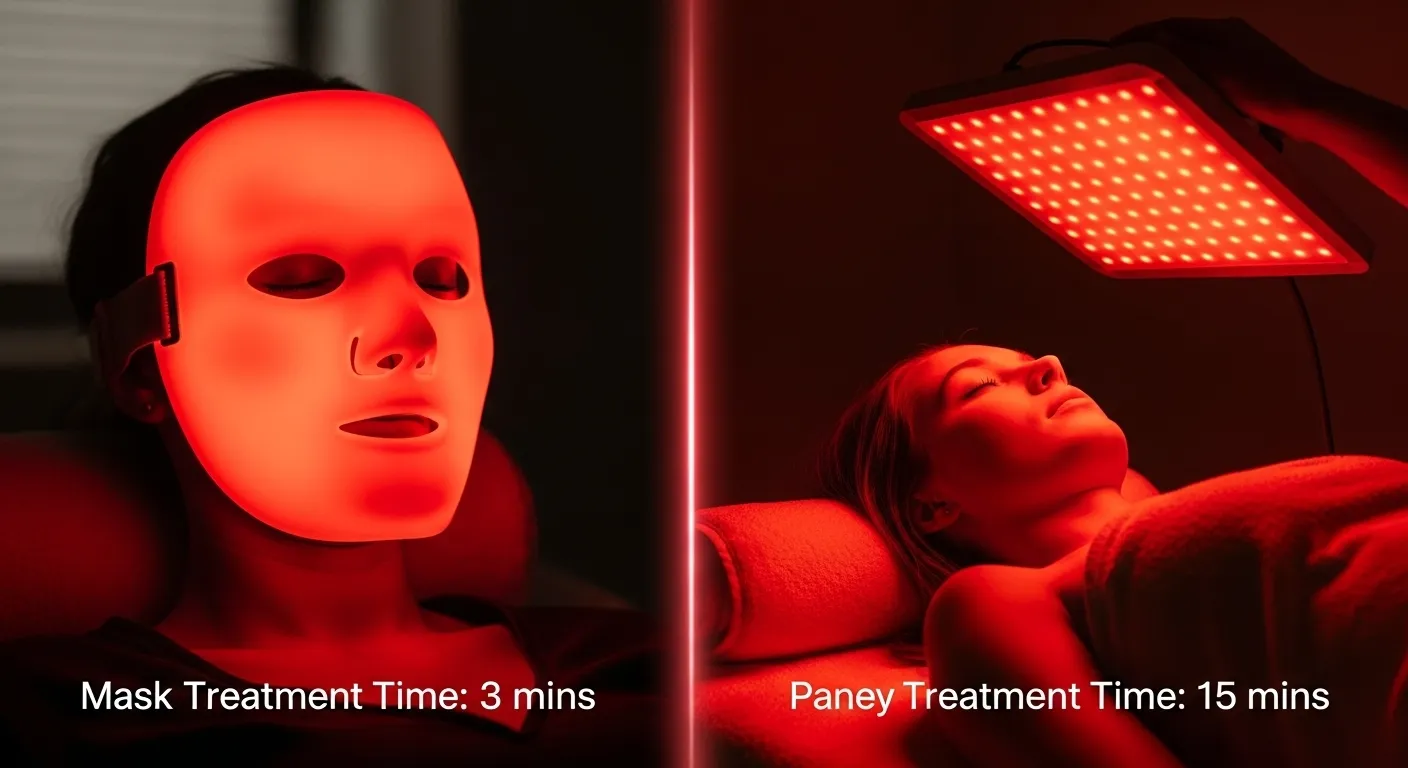
Treatment Time: 3 mins vs 15 mins
The most practical difference lies in treatment duration. With higher power output, panels can achieve the therapeutic dose of 10 joules per square centimeter (recommended for skin health) in just 2–3 minutes. Notably, masks require much longer sessions, 10–15 minutes for high-end models like Omnilux, and up to 60–90 minutes for lower-powered options like Dermabeam. This time difference adds up over weeks of consistent treatment.
Higher irradiance means more efficient therapy, delivering greater results in less time. For busy individuals seeking maximum benefits with minimal time investment, panels offer clear advantages in treatment efficiency.
Coverage and Use Cases: Face-Only vs Full-Body Benefits
Beyond the power differences, masks and panels serve different purposes. Your choice between them depends on your treatment goals and physical needs.
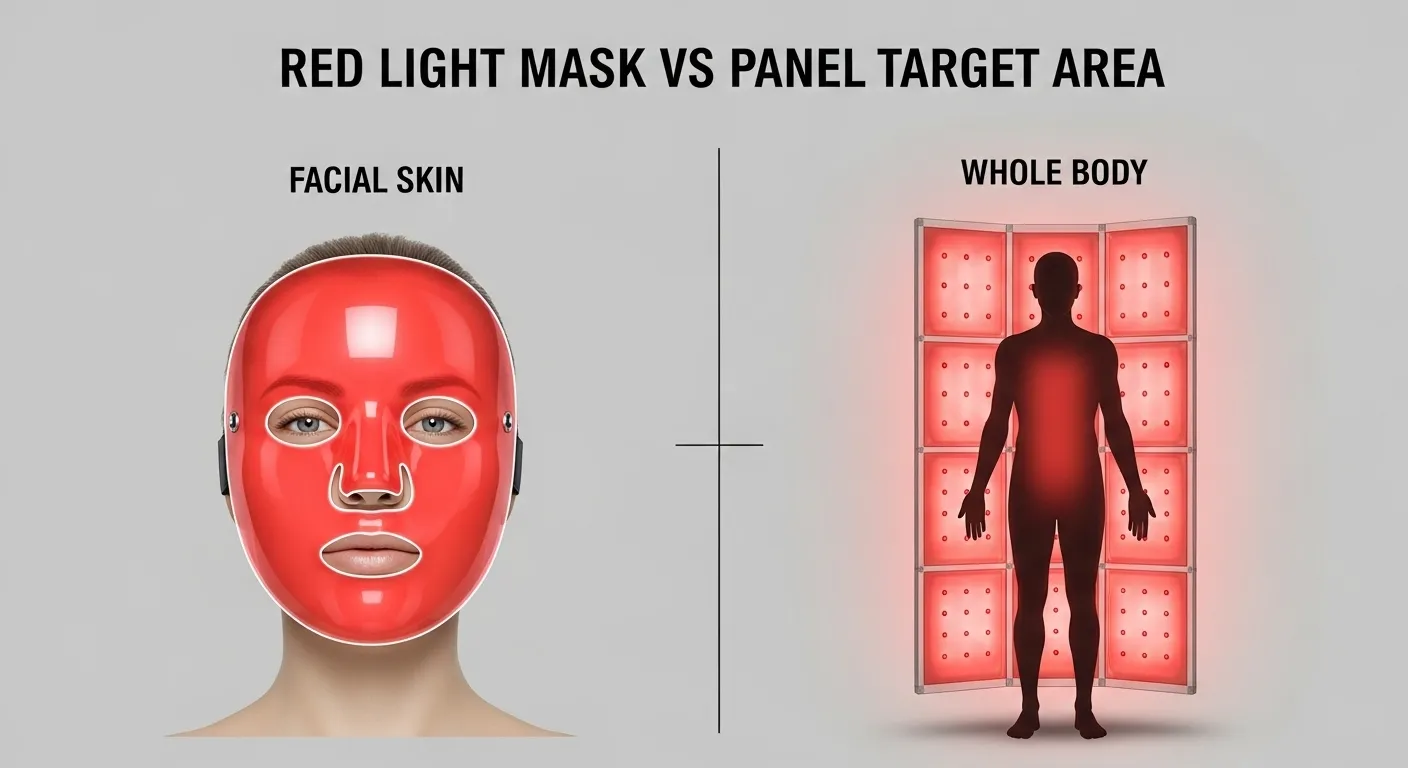
Target Area: Facial Skin vs Whole Body
Red light masks only target facial skin and are designed for cosmetic applications like reducing wrinkles and treating acne. Panels, unlike masks, can treat the face, neck, chest, back, and other body areas. This expanded coverage makes panels a full-body solution rather than a spot treatment.
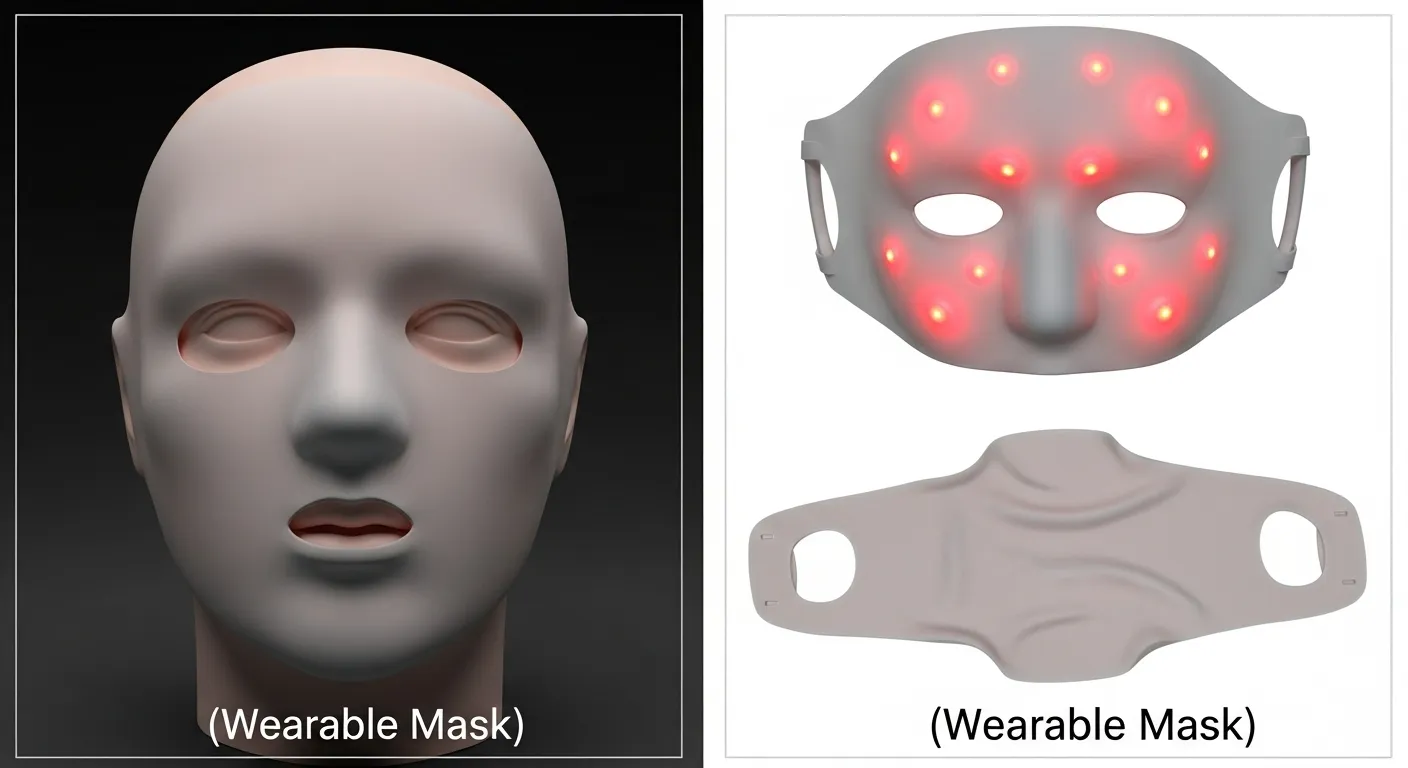
LED Face Panel vs Wearable Mask
For practical use, masks are lightweight, portable, and require shorter sessions, typically 10–20 minutes. Their design allows multitasking during treatment, such as reading or watching TV. In spite of that, this convenience comes with limitations in effectiveness.Panels need dedicated space but deliver more consistent light coverage.
Light Spectrum and Wavelengths: What Matters Most?
The science behind effective light therapy hinges on wavelength specificity. Research shows that not all light frequencies deliver equal benefits. The wavelength spectrum used makes a critical difference in treatment outcomes for both masks and panels.
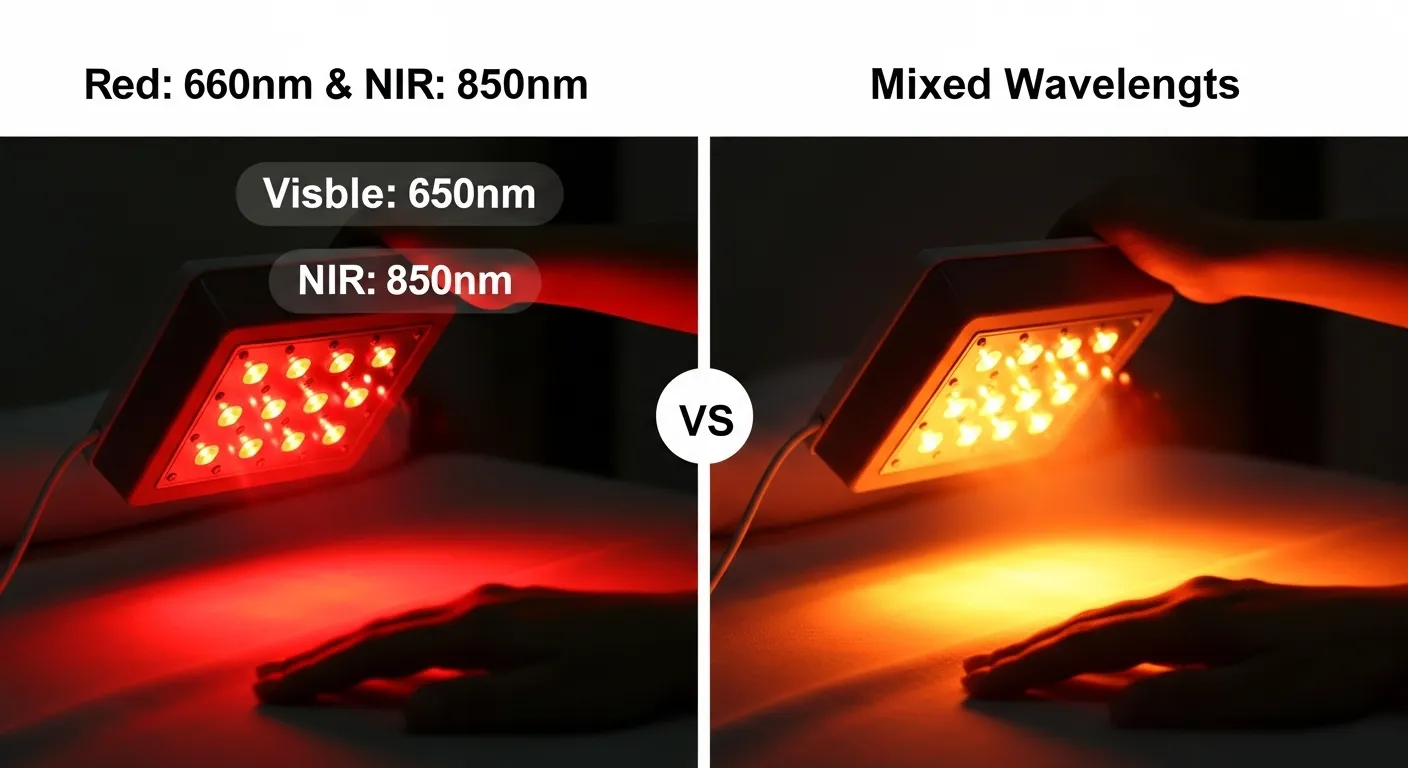
Red and NIR
Scientific research consistently identifies two optimal wavelengths: red light at 660nm penetrates 2-4mm into the skin, while near-infrared light at 850nm reaches 30-50mm deep. These specific wavelengths stimulate cytochrome c oxidase, a key mitochondrial enzyme. Many masks advertise “broad spectrum” benefits, yet most colors lack therapeutic value. Studies confirm the 660nm-850nm combination creates synergistic effects, treating surface skin and deeper tissues simultaneously.
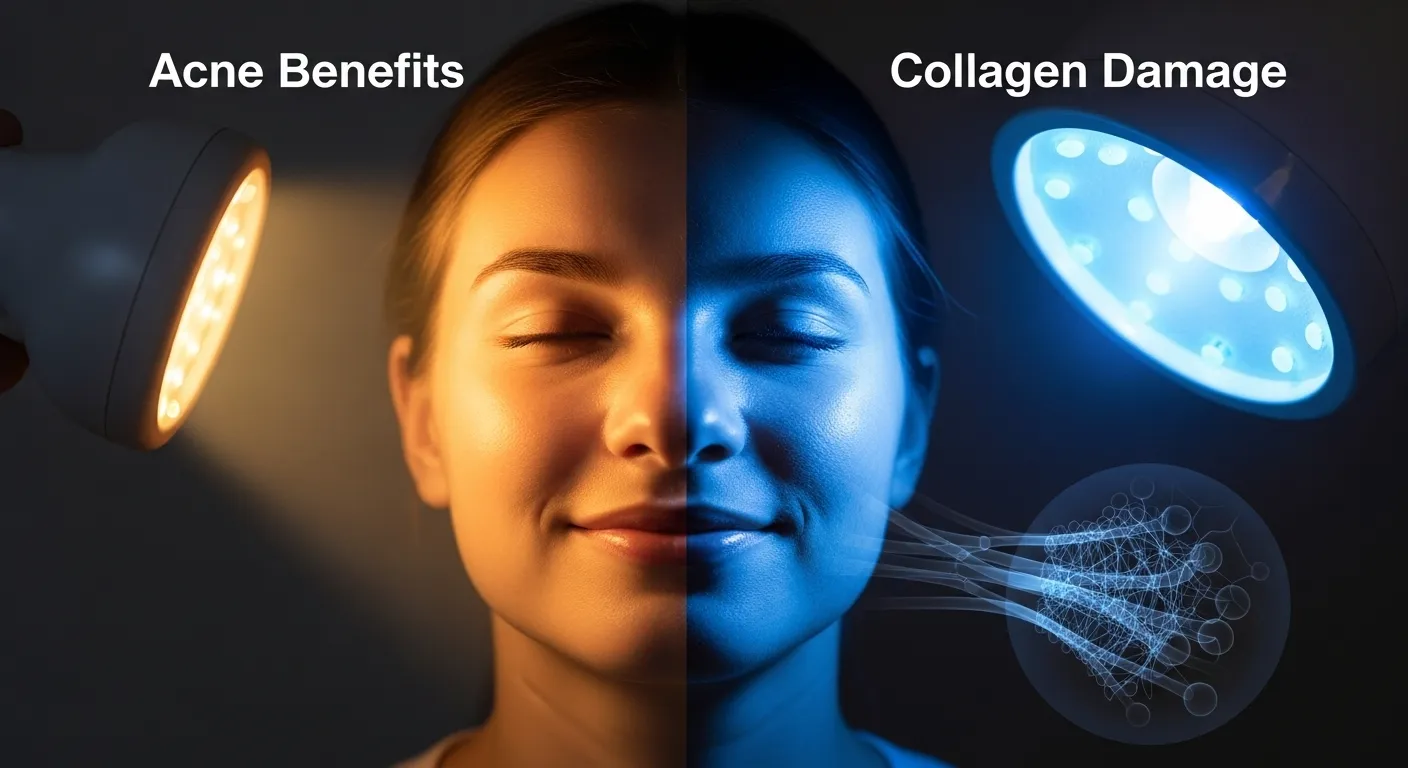
Blue Light Risks
Blue light therapy (380-500nm) effectively kills acne-causing bacteria. Unfortunately, it also generates free radicals and oxidative stress that accelerate skin aging. High-energy blue light penetrates the cornea and lens, potentially causing photochemical damage to eye tissue. Extended exposure can trigger inflammatory responses associated with dry eye disease. Mask vs Panel typically omit blue light altogether and focus on research-backed red/NIR combinations.
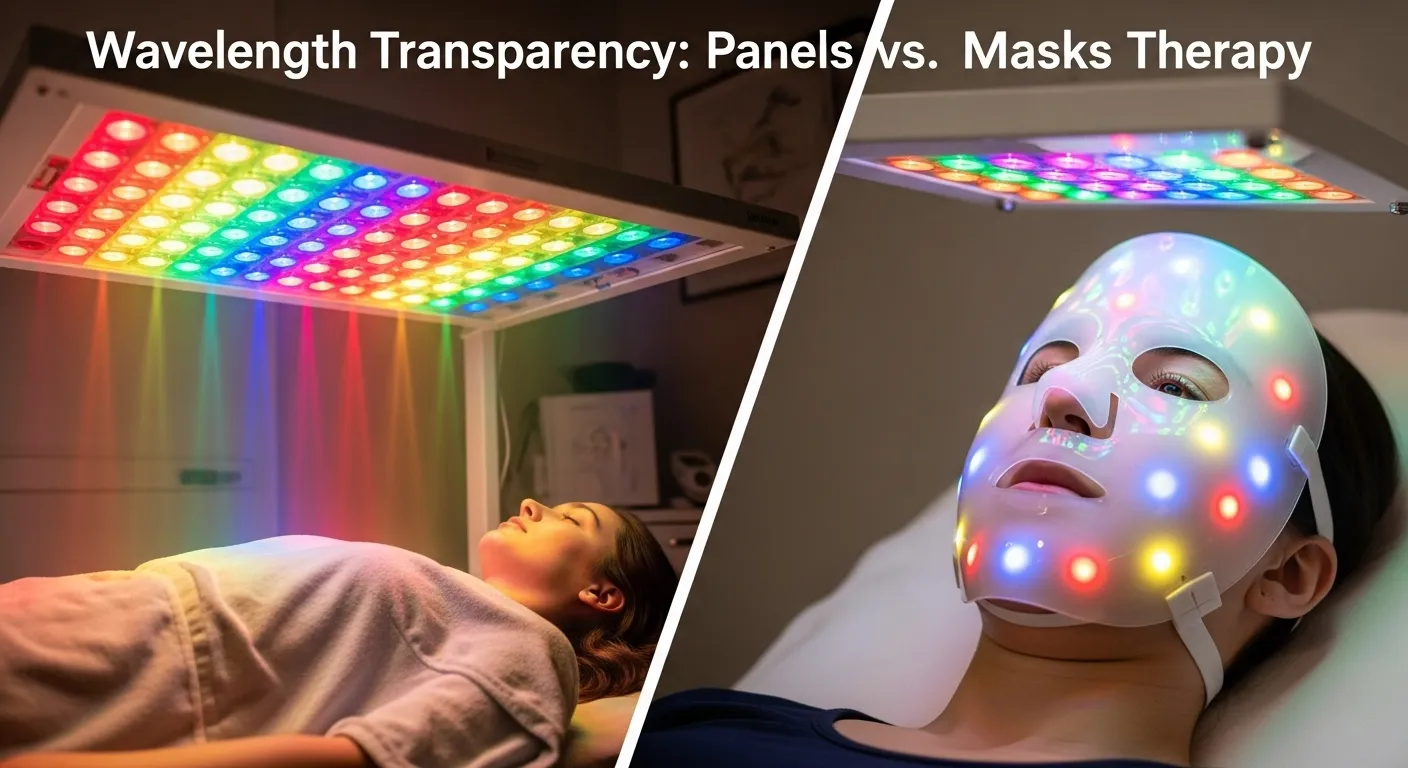
Wavelength Transparency
Reputable panel manufacturers typically disclose precise wavelength specifications and irradiance data verified through third-party testing. Conversely, many Mask vs Panel manufacturers remain vague about their devices’ exact wavelengths. This transparency gap matters tremendously. Studies show treatments outside the therapeutic window (600-900nm) yield minimal benefits whatever the treatment duration. For optimal results, devices should deliver narrow-spectrum wavelengths rather than diffuse, multi-colored light.
Cost, Convenience, and Long-Term Value
Evaluating the financial investment in red light therapy devices reveals surprising differences in long-term value. Despite similar original costs, Mask vs Panel often deliver superior returns on investment.
Upfront Cost: $200–$1000 Masks vs $300–$1500 Panels
At first glance, both device categories appear similarly priced. Quality red light masks range from $200 to $1000 depending on brand and features. Comparable panels start around $250 for smaller models like the Hooga 300, reaching $1500 for full-body systems. Premium options like the Joovv Go 2.0 ($649) offer specialized features including Bluetooth connectivity and multiple light modes.
Cost per Watt: $16–$200 vs $4–$10
In terms of value, the cost-per-watt metric tells a compelling story. Panels deliver therapeutic light at just $4–$10 per watt. As with masks, they cost more at $16–$200 per watt of output. This dramatic efficiency difference makes panels considerably more economical across their lifetime.
Portability and Ease of Use
Masks excel in convenience. they’re hands-free, allowing multitasking during treatment. Alternatively, handheld options like the MitoPRO Mobile offer flexibility with built-in stands, adjustable straps, and extended battery life. Panel sessions require dedicated space yet finish faster, typically completing treatments in 3 minutes versus 10–15 minutes for masks.
Durability and Warranty: 1 Year vs 3 Years
Finally, longevity favors panels with most offering 2–3 year warranties. Premium brands like Lumi Visage extend coverage to an industry-leading 5 years. Masks typically include shorter 1–2 year warranties, reflecting their lighter construction and potentially shorter lifespan.
Conclusion
After looking at the evidence, it’s clear that panels outperform masks in most key metrics. Panels deliver up to 60 mW/cm² compared to masks’ 1–25 mW/cm², achieving results in just 3 minutes instead of 15–90. Masks offer portability and hands-free convenience but at the cost of effectiveness. Panels, though less portable, provide broader coverage for muscle recovery, pain relief, sleep, and cosmetic benefits. Wavelength comparison also favors panels, most target the proven 660 nm red and 850 nm near-infrared, while many masks use mixed or even harmful blue light.
From a value standpoint, panels deliver power at $4–10 per watt versus masks’ $16–200, with longer warranties (up to 5 years vs 1–2). If you want quick, simple facials, a good Mask vs Panel works. But for deeper benefits, faster sessions, whole-body use, and long-term value, panels are the superior investment. The evidence overwhelmingly supports panels as the more effective choice in 2025. you can read our comparison guide about Vibration Platform: My 60-Day Test Results (2025) also.