
What Does a Hyperbaric Chamber Do? Doctor’s Guide
Hyperbaric chambers, prominent for treating scuba and deep-sea divers with pressure-related issues, offer medical benefits nowhere near what most people think. A hyperbaric chamber creates a pressurized space where patients breathe 100% pure oxygen. This specialized treatment raises air pressure to levels that are much higher than normal atmospheric pressure.
Hyperbaric oxygen therapy (HBOT) helps deliver more oxygen to the body’s tissues. Patients who enter these oxygen chambers experience a controlled environment that improves healing. The FDA has cleared oxygen therapy to treat several conditions. These include decompression sickness, severe burns, carbon monoxide poisoning, and non-healing wounds. HBOT proves safe for FDA-approved treatments, and serious complications rarely occur.
This piece will show you how these chambers work, which conditions they treat, what your treatment might look like, and the safety measures you should know about before starting this therapy.
How a Hyperbaric Chamber Works in Oxygen Therapy
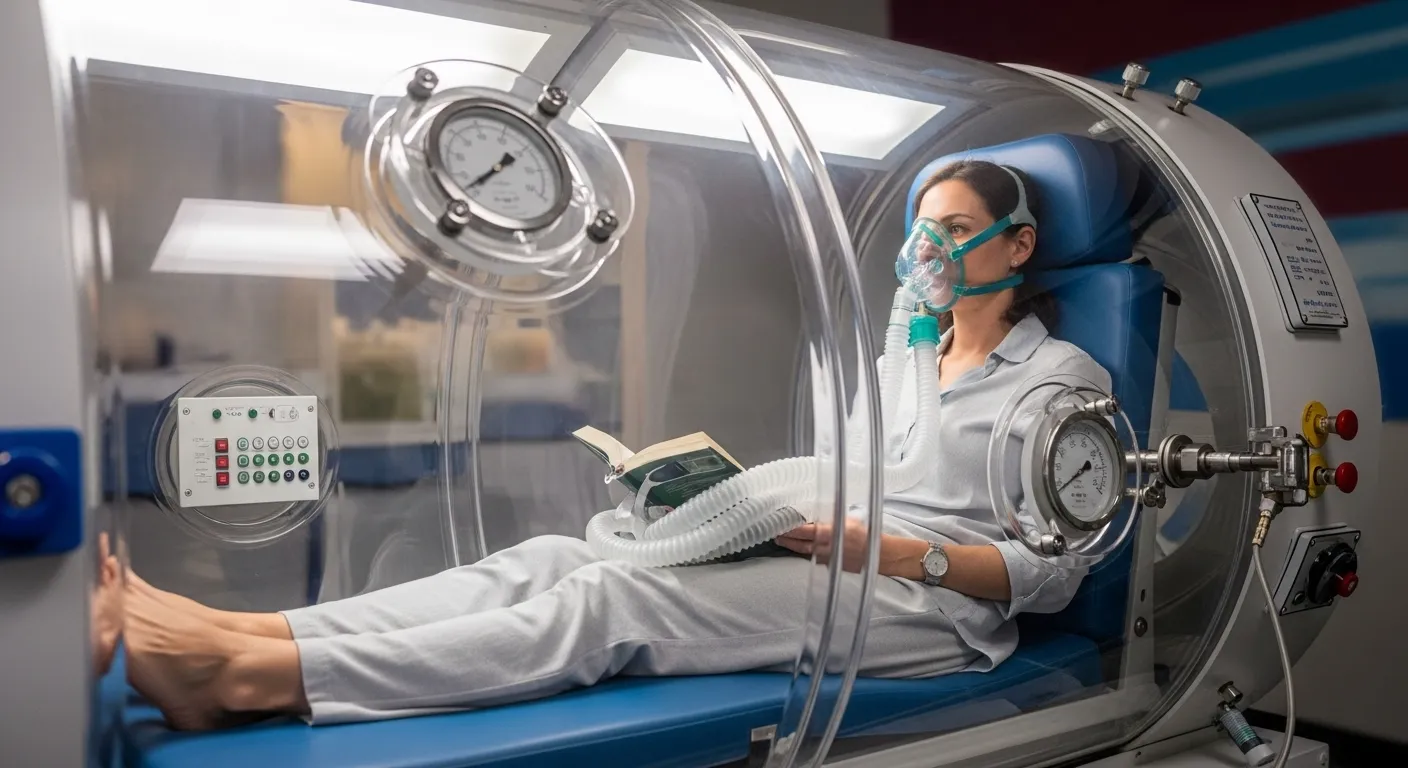
Hyperbaric chambers work through a straightforward but effective principle. They deliver 100% pure oxygen at higher pressures to improve healing. The specialized environments create air pressure 2-3 times above normal atmospheric levels. This pressure changes how oxygen works in the body.
Oxygen Absorption Under Pressure
The higher pressure lets lungs collect significantly more oxygen than normal air pressure allows. Blood plasma also dissolves oxygen directly under these conditions. Normal atmospheric pressure results in plasma oxygen levels of about 3ml/L, but these levels jump to 60ml/L at 3 ATA (atmospheres absolute).

Session Duration and Treatment Frequency
Most treatment sessions run between 45 minutes and 2 hours. Severe decompression cases might need longer sessions up to 5 hours. Standard protocols include 90-minute sessions spread across 20-30 treatments. Patients usually receive therapy one to five times each week.
Types of Hyperbaric Chambers
Patients can choose between two main types of hyperbaric chambers:
Monoplace chambers fit one patient in a clear acrylic tube. Pure pressurized oxygen fills the entire chamber, so patients don’t need masks. These chambers let doctors customize treatment plans based on specific conditions.
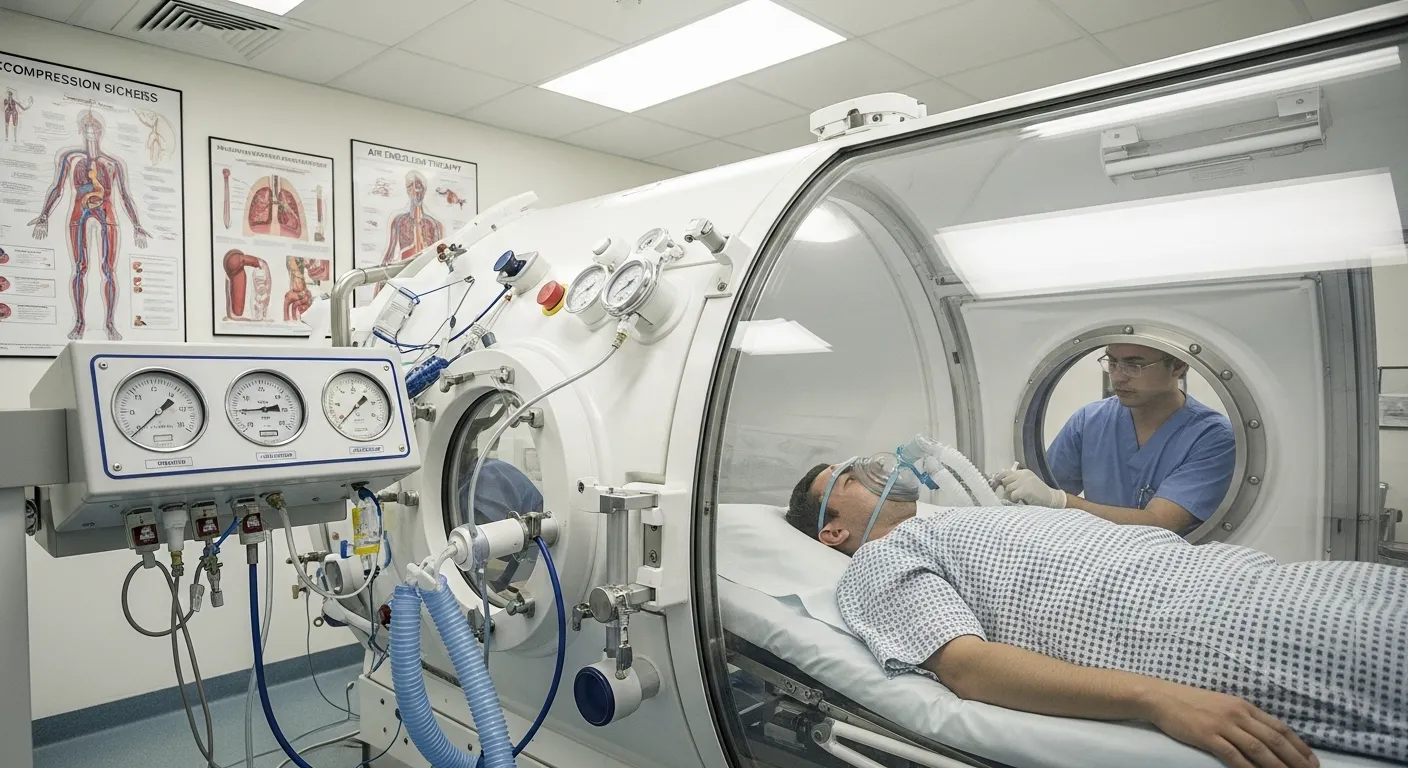
Multiplace chambers can treat several patients at once in a room-sized unit. Regular air pressurizes these chambers while patients receive oxygen through masks, hoods, or endotracheal tubes. The core team can enter these chambers to monitor patients during treatment.
Conditions Treated with Hyperbaric Oxygen Therapy
The FDA has approved hyperbaric oxygen therapy to treat thirteen specific conditions, making it a crucial treatment option for patients with a variety of medical needs. HBOT plays a vital role in treating carbon monoxide poisoning. It prevents cognitive damage by displacing carbon monoxide from hemoglobin and preserves ATP levels in affected tissues. Patients need treatment within six hours of exposure to get the best results.
Decompression Sickness and Air Embolism
Patients with decompression sickness, known as “the bends,” need HBOT right away. The treatment reduces nitrogen bubbles in the bloodstream and helps tissues recover while delivering more oxygen. Patients with air or gas embolism also benefit from HBOT. The therapy shrinks bubbles based on Boyle’s Law and works best when started within six hours.
Chronic Wounds and Infections
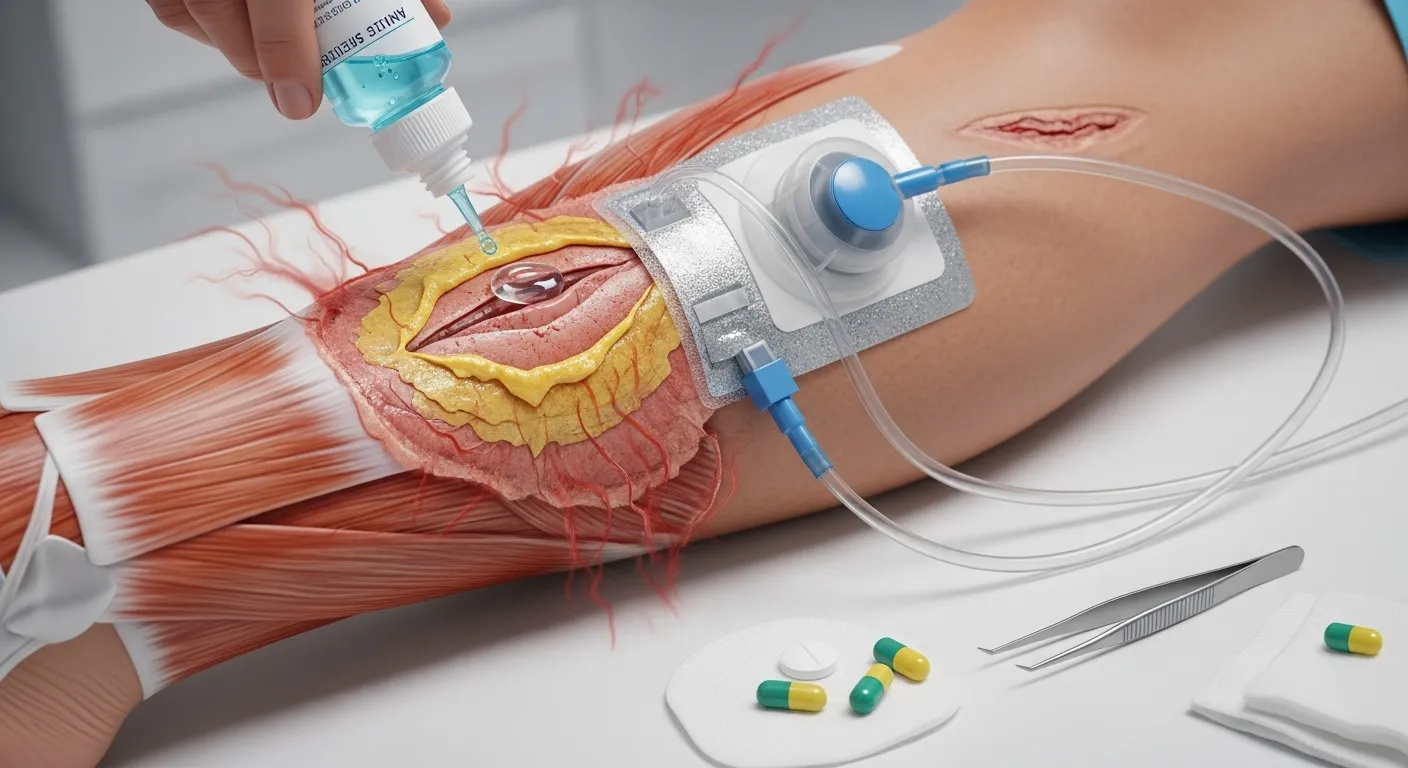
HBOT shows remarkable results in treating diabetic foot ulcers, particularly in Wagner grade 3 or higher cases. Research shows that patients who receive HBOT heal faster and stay healed longer compared to standard care alone. The therapy also helps fight serious infections by boosting white blood cell function and making antibiotics more effective.

Other Medical Applications and Limitations
HBOT helps treat radiation injuries, sudden hearing loss, gangrene, severe anemia, crush injuries, non-healing wounds, and skin grafts that risk tissue death. While HBOT works well for these conditions, it remains controversial for treating Alzheimer’s, autism, and COVID-19, which haven’t received FDA approval yet.
What to Expect During a Hyperbaric Oxygen Therapy Session
HBOT treatments take between 45 minutes and 2 hours. Patients can lie down or sit inside the chamber while breathing pure oxygen as the pressure builds up gradually. About 14% of patients experience ear discomfort as the most common side effect. The treatment leaves most patients feeling fine, though a few might feel lightheaded temporarily afterward. Photodynamic Therapy Shows 90% Success in Skin Cancer is very good guiding.

Common Side Effects and Discomforts
The biggest problem patients face is middle ear barotrauma. Its rates range from 2% to 84% based on patient factors and prevention measures. Medical teams teach patients special ear-clearing techniques to lower this risk. Some patients feel claustrophobic, especially in smaller monoplace chambers.

Ensuring Safe Treatment
Treatment risks drop by a lot at UHMS-accredited facilities with properly trained staff. These facilities follow strict safety protocols and maintain their equipment well. The core team has the expertise to manage patient care and handle emergencies effectively.
Conclusion
Hyperbaric oxygen therapy is a remarkable medical intervention that reaches way beyond its original use in decompression sickness. Medical providers and patients need to understand its mechanisms and applications. This piece explores how pressurized oxygen environments change oxygen delivery throughout body tissues. you can read our comparison guide about What Is an Infrared Sauna.
The therapy uses both monoplace and multiplace chambers that offer unique advantages based on patient needs. HBOT’s legitimacy stems from FDA approval for thirteen specific conditions, including carbon monoxide poisoning, diabetic foot ulcers, severe infections, and radiation injuries.
Patient safety remains the top priority during treatment. Most patients experience minimal side effects. Understanding risks like ear barotrauma, temporary vision changes, or rare oxygen toxicity seizures helps patients make better decisions. Treatment at accredited facilities with trained staff reduces these risks drastically.
Hyperbaric oxygen therapy is a great way to get results in modern medicine when used appropriately. Patients should consult specialists to see if HBOT fits their needs. Ongoing research may expand its applications and offer hope for conditions resistant to standard treatments.