810nmPrimary · Deep tissue
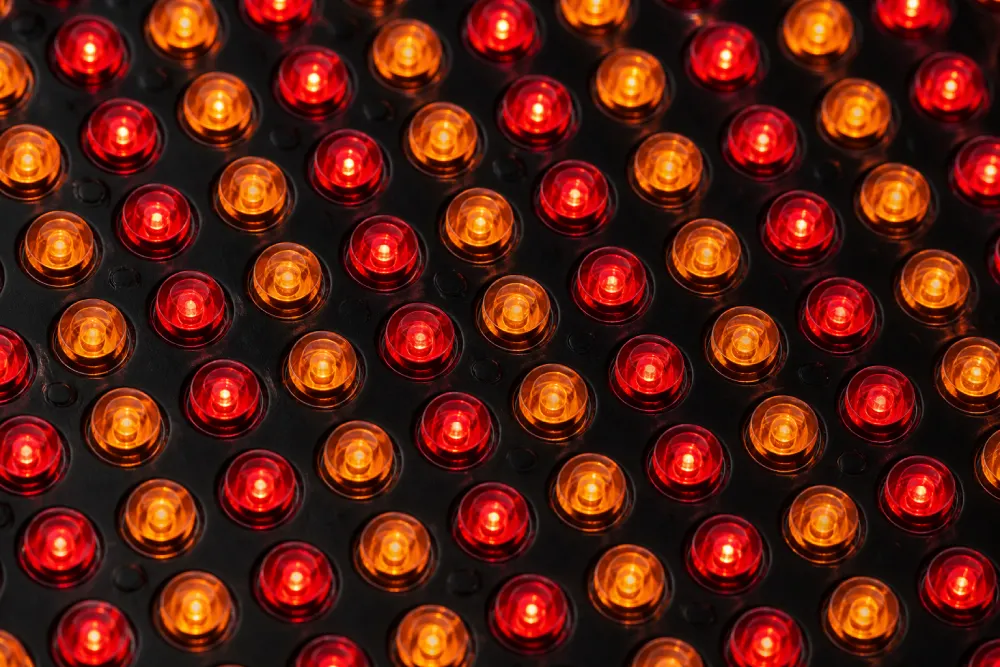
Delivers the ideal balance of deep tissue penetration and effective energy conversion. We refer to 810nm as the primary wavelength for targeting deep tissue concerns. No other wavelength matches its performance. Perfectly positioned in the center of the therapeutic window, 810nm consistently demonstrates the highest efficacy in triggering the deep photochemical reactions that define PBMT.
850nmComplement · Diversity
An effective complement to the 810nm diodes. While 850nm doesn’t match the performance of the more advanced (and expensive) 810nm diodes, it delivers solid results and helps keep overall pod costs more accessible. Based on current research, we wouldn’t use 850nm as a primary wavelength for PBM—but its inclusion adds valuable wavelength diversity and aligns with standards commonly seen in many PBM systems.
610nm / 630nmCosmetic · Surface
Widely Accepted for Cosmetic Applications. Many leading U.S. manufacturers consider the 600-660nm range to be ideal, particularly for cosmetic and surface-level treatments. This wavelength is more readily absorbed by melanin and blood, making it effective for skin-focused applications. While it doesn’t penetrate as deeply as others, it offers unique benefits and is widely accepted in the beauty and wellness industry. Interestingly, brands that emphasize this range often focus more on pulsing techniques rather than sheer dosage. While much of the support for this approach is anecdotal, the results are promising. That’s why ReGen Red includes independently controlled 630nm diodes, giving users access to this popular wavelength with full flexibility and control.
940nmNear-IR · Outside optimal window
An effective complement to the 810nm diodes. Near-Infrared, But Outside the Optimal Window. Just above the 800nm range lies the 900–980nm band, which is commonly used in U.S.-made, high-dosage Class IV systems and High-Intensity Laser Therapy (HILT) devices. These wavelengths became popular largely due to the availability and lower cost of diodes—originally sourced from high-volume surgical laser applications. In fact, early on, 10-watt 810nm diodes weren’t even available. However, this range is significantly less efficient for deep tissue therapy. Positioned outside the optimal therapeutic window, 900–980nm wavelengths primarily excite water molecules, converting a large portion of the energy into heat rather than triggering a photo-chemical reaction. As a result, it lacks the depth and efficacy seen in the 800nm range for PBMT.